Sand Blasting Air Compressor Set-up – Royal Air Component
Sand Blasting Air Compressor Set-up Manufacturer & Supplier
Royal Air Component provides reliable and efficient Sand Blasting Air Compressor Set-ups designed to meet the compressed air requirements of industrial surface preparation, abrasive blasting, and cleaning applications.
A Sand Blasting Air Compressor Set-up is an essential system used to generate and deliver high-pressure compressed air for blasting operations. It supplies the required air pressure and volume to propel abrasive materials such as silica-free blasting media, aluminium oxide, garnet, and steel grit onto metal and other surfaces to remove rust, paint, corrosion, scale, and contaminants.
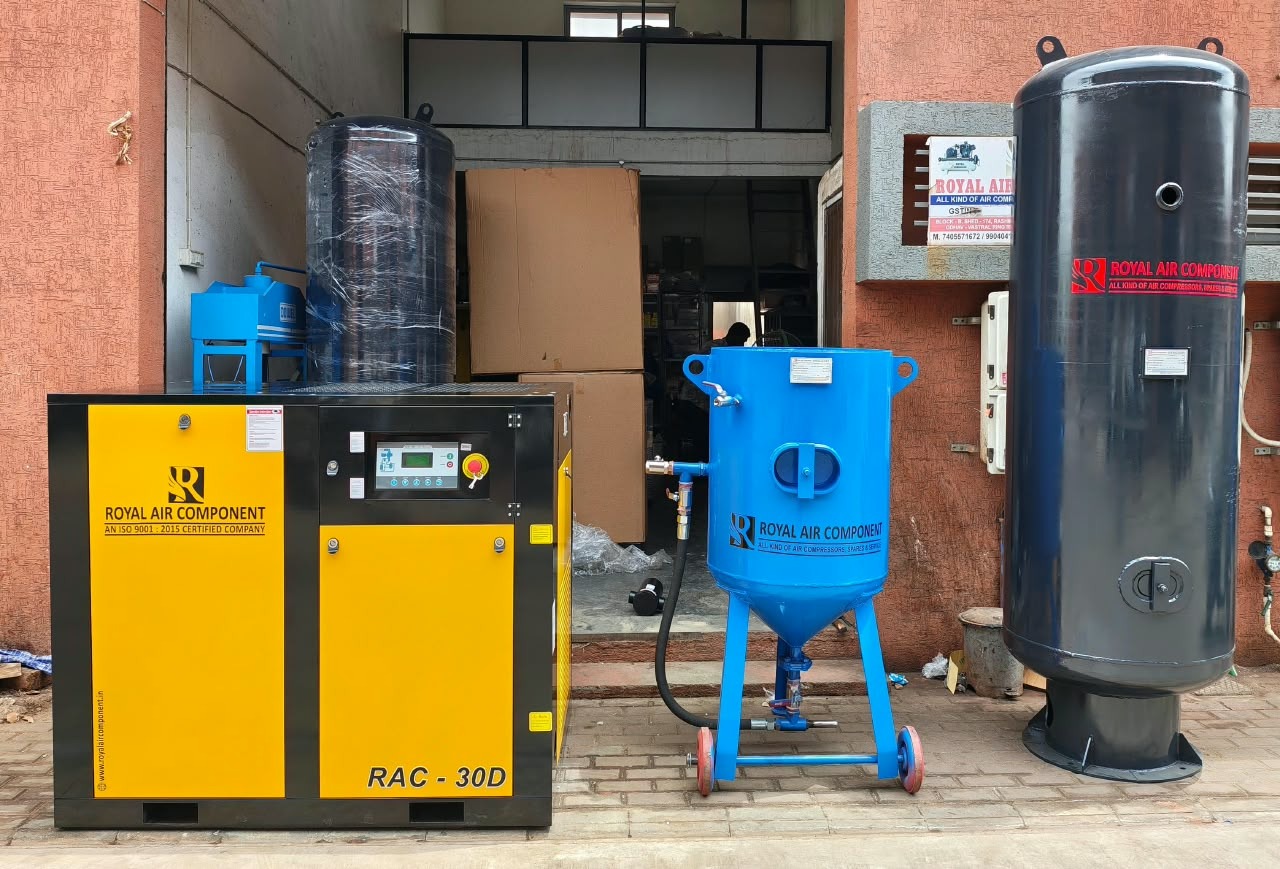
A properly designed sand blasting air compressor system ensures consistent blasting performance, improved surface finishing, and efficient material removal. The complete set-up can include a rotary screw air compressor, air receiver tank, air dryer, moisture separator, compressed air filters, blasting hose, and sand blasting machine.
Royal Air Component offers industrial compressed air solutions and compressor accessories suitable for different sand blasting requirements.
Components of Sand Blasting Air Compressor Set-up
A complete sand blasting air compressor system generally consists of the following components:
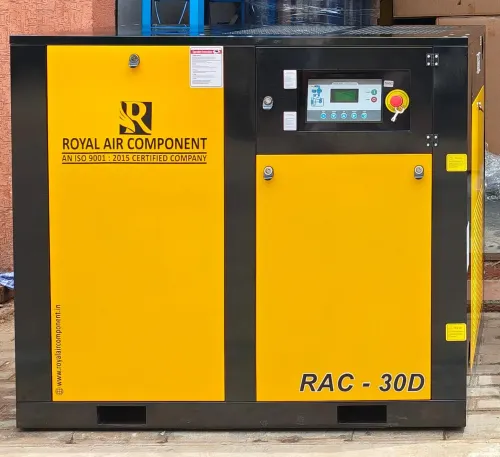
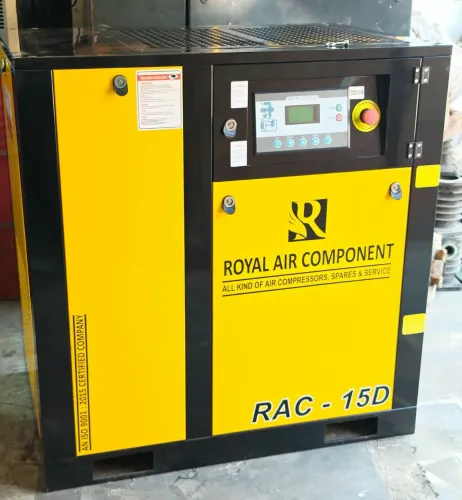
1. Rotary Screw Air Compressor
The air compressor generates the compressed air required for abrasive blasting operations. It should be selected according to the blasting nozzle size, operating pressure, and required airflow.
2. Air Receiver Tank
An air receiver tank stores compressed air and helps manage fluctuations in air demand during blasting operations.
3. Air Dryer
An air dryer removes moisture from compressed air, helping prevent abrasive media from becoming damp and reducing moisture-related blasting problems.
4. Moisture Separator
A moisture separator removes condensed water droplets from compressed air before it reaches the blasting equipment.
5. Compressed Air Filters
Air filters help remove oil aerosols, dust, and other contaminants depending on the filtration system selected.
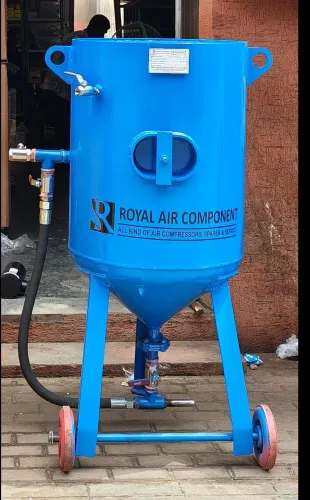
6. Sand Blasting Machine
The blasting machine stores and regulates abrasive media, which is propelled through the blasting hose using compressed air.
7. Blasting Hose and Nozzle
The blasting hose carries the abrasive-air mixture to the blasting nozzle, where it is directed onto the surface being treated.
Key Features of Sand Blasting Air Compressor Set-up
- High Air Delivery: Provides the airflow required for effective abrasive blasting.
- Consistent Air Pressure: Supports stable blasting performance during surface preparation.
- Industrial Performance: Suitable for demanding industrial blasting applications.
- Moisture Control: Air treatment equipment helps reduce moisture-related operational issues.
- Efficient Surface Cleaning: Supports the removal of rust, paint, corrosion, and surface contaminants.
- Flexible Configuration: Available in different compressor capacities depending on application requirements.
- Reliable Operation: Designed for regular industrial surface treatment operations.
- Complete System Integration: Compressor, receiver, dryer, filters, and blasting equipment can be selected according to project requirements.
Applications of Sand Blasting Air Compressor Set-up
Sand blasting compressor systems are widely used in:
- Automobile Industries
- Shipbuilding and Ship Repair
- Steel Fabrication Industries
- Structural Steel Manufacturing
- Pipeline Cleaning
- Industrial Painting and Coating
- Construction Industries
- Heavy Engineering Industries
- Metal Surface Preparation
- Storage Tank Cleaning
- Machinery Refurbishment
- Industrial Maintenance Projects
How to Select the Right Air Compressor for Sand Blasting?
Selecting the correct air compressor is important for achieving efficient blasting performance.
Consider these factors before purchasing:
Selection Parameter
Requirement
Air Delivery
Based on blasting nozzle size and number of operators
Working Pressure
According to blasting equipment requirements
Compressor Capacity
Based on total air consumption
Compressor Type
Rotary Screw Air Compressor
Air Receiver
Based on system demand and compressor specifications
Air Dryer
Suitable for moisture removal
Filtration
Based on compressed air quality requirements
Operating Hours
Based on daily blasting requirements
Important: Compressor capacity should be selected primarily according to the nozzle's required CFM at the specified blasting pressure. A higher pressure rating alone does not guarantee sufficient blasting performance.
Why Choose Royal Air Component?
Royal Air Component provides industrial air compressor solutions, spare parts, and compressed air system support for different industrial applications.
- Industrial air compressor solutions.
- Rotary screw air compressor expertise.
- Sand blasting compressor system guidance.
- Air compressor spare parts and accessories.
- Technical assistance for compressor selection.
- Professional customer support.
- Reliable solutions for industrial applications.
Choose Royal Air Component for dependable Sand Blasting Air Compressor Set-up solutions designed to support efficient industrial surface preparation.
Frequently Asked Questions (FAQs)
1. What is a Sand Blasting Air Compressor Set-up?
A Sand Blasting Air Compressor Set-up is a compressed air system used to supply pressurized air to blasting equipment. It propels abrasive materials onto surfaces to remove rust, paint, corrosion, and other contaminants.
2. Which type of air compressor is suitable for sand blasting?
Rotary Screw Air Compressors are commonly preferred for industrial sand blasting applications because they provide continuous compressed air and are suitable for extended operating hours.
3. What is the required air pressure for sand blasting?
Industrial sand blasting commonly operates around 6–8 bar (approximately 87–116 PSI), depending on the blasting machine, nozzle, abrasive media, and surface preparation requirements.
4. How much CFM is required for a sand blasting machine?
The required CFM depends on the blasting nozzle diameter, operating pressure, and number of blasting operators. Larger nozzles require higher airflow. Always check the nozzle manufacturer's air consumption chart.
5. Why is an air receiver tank required in a sand blasting system?
An air receiver tank stores compressed air, helps stabilize pressure during varying demand, and reduces frequent compressor loading and unloading.
6. Why is an air dryer important for sand blasting?
An air dryer helps remove moisture from compressed air. Excess moisture can cause abrasive media to clump, interrupt media flow, and affect blasting quality.
7. Can a 15 KW Rotary Screw Air Compressor be used for sand blasting?
Yes, a 15 KW (approximately 20 HP) rotary screw air compressor may be suitable for smaller blasting applications, depending on nozzle size, required CFM, working pressure, and operating duration.
8. What components are required for a complete sand blasting compressor system?
A typical system includes a rotary screw air compressor, air receiver tank, air dryer, moisture separator, compressed air filters, sand blasting machine, blasting hose, and nozzle.
9. What is the difference between sand blasting and shot blasting?
Sand blasting uses compressed air to propel abrasive media through a nozzle, whereas shot blasting generally uses a mechanical wheel to accelerate abrasive materials onto a surface.
10. Which abrasive materials are used in sand blasting?
Common abrasive materials include aluminium oxide, garnet, steel grit, steel shot, and other suitable blasting media. Material selection depends on the surface and required finish. Silica-free alternatives are recommended to avoid the serious health hazards associated with respirable crystalline silica.
Keywords